Das Wichtigste in Kürze
- Base: BMW R100R Paralever (from 1991), roadster conversion
- Engine: 1070 cc, dual ignition, SE camshaft, 85–90 hp, approx. 90 Nm
- Exhaust: new short bobber exhaust for Paralever (series)
- Suspension: TF-X / SE Performance Line
- Cockpit: Daytona instrument, 80 mm
- Tires: Pirelli STR 110/80-18 and 140/80-17
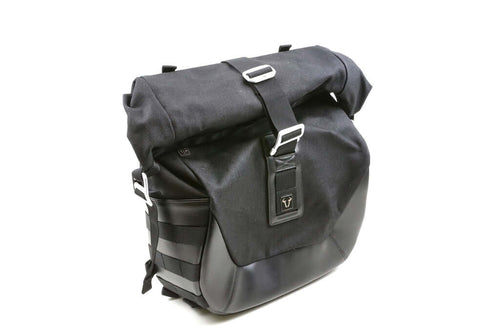
- Luggage: detachable bags, approx. 14 l with expansion gusset
A BMW R100R Paralever, converted into a roadster – specifically geared towards urban mobility. The question was: Can I combine the useful with the, dare I say, useless? Does a custom bike have anything to do with utility? I would say: yes. Sure, taking the four kids to school in a Ferrari won't work. But this roadster is for a customer from Cologne who already has a bobber from us and says: "I deal with Cologne traffic every morning – and I want to treat myself to a little piece of joy first thing in the morning."
Luggage for the office: The 14-liter bags
When I talk about utility, the luggage situation always comes into play. In this case, it's not the small bags, but the larger ones with almost 14 liters – you can recognize them by their height. And they also have an expansion gusset that you can unfold. You can ride to the office in the morning with them and take your laptop or work clothes along.
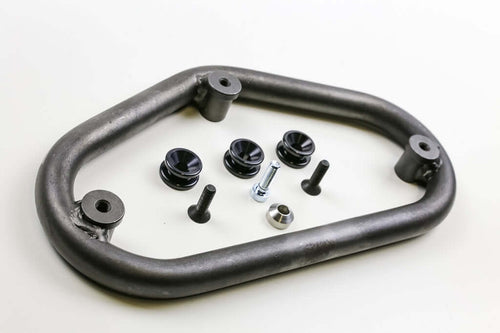
The bags have a click-fastening system, making them easy to remove. The bag mounts themselves are bolted on: If you don't want them at all anymore, you can remove them, and all that remains are two small bushings – put a blind screw on, and you won't see them anymore. This isn't intended for four weeks in Africa, but for urban use it's more than enough, and definitely sufficient for a weekend or week-long trip.
Paralever or Monolever – how can you tell?
The R100R Paralever is the last generation of the two-valve models, built from 1991 onwards – the Monolever was produced in parallel until 1996.
- Rear swingarm and final drive: Both have a shock absorber on the right side. But the Paralever has a much more massive final drive and this additional joint for torque support. The driveshaft rotates against the ring gear, and people used to call it a "rubber cow": when you accelerate, the rear end lifts up slightly. This was largely eliminated by the joint. Incidentally, in the older models, the biggest effect came from the fork with its very soft, long springs – that created a seesaw effect that amplified the whole thing. With our suspension components and settings, we can get that under control for the Monolever and Twinshock models as well.
- Fork and brake: The Paralever has a thicker fork with 41 mm stanchions and four-piston fixed calipers – in terms of the original setup, the best braking performance of the two-valve models. However: With our brake discs, pads, and the master cylinder, the Monolever brake is hardly inferior in overall effect. If you only ride the Monolever, you would say: It brakes perfectly.
- Tank: So far, we have almost always adapted the Monolever tanks to the Paralever because we found that better looking – and I often told people: "Leave it, put a different one on." Olli really wanted to keep his tank, chose a color – and I have to admit: In this combination, I think it looks chic.
I often use Paralever models for tall customers. You don't sit higher than on a Monolever (apart from the GS models), but due to the final drive and fork, the motorcycle looks larger and more voluminous. That's more of an aesthetic thing: The proportion between rider and motorcycle is more in harmony.
Air filter: Why the old housing is here
We used the air filter housing from the old BMWs here. The Paralever models only came out from 1991 onwards – if you want to be strictly legal, open filters can only be registered with an exhaust emission report. That costs 3,000 to 4,000 euros, so it's not feasible for a single registration. There are inspectors who will register it somehow anyway – but it's definitely not a safe bet.
If you don't like the large filter box, one option is the air filter box from the old models up to 1980. That is also a gray area, because in principle: as soon as you change something on the vehicle – carburetor, air filter, etc. – the general operating permit (ABE) expires. However, in terms of noise and exhaust emissions, the housing makes no difference, and it integrates nicely into the engine and follows the frame.
Premiere: The short bobber exhaust for Paralever
Previously, we only had the longer exhaust version for the Paralever. Now, with a new header, there is also the short bobber exhaust as a series product for the Paralever models – shown here as a prototype. I'm always a bit at odds with the very short systems, but we used different internals: compared to the high-mounted 2-in-2 systems, we lose two or three Newton meters, which is not noticeable while riding.
Engine: 1070 cc, dual ignition, 90 Nm
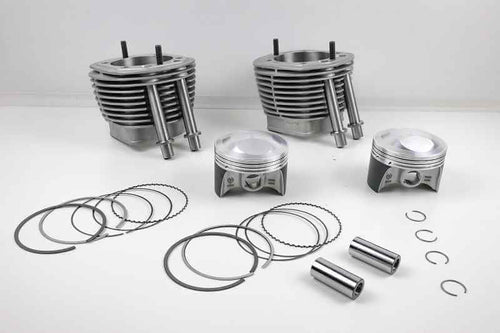
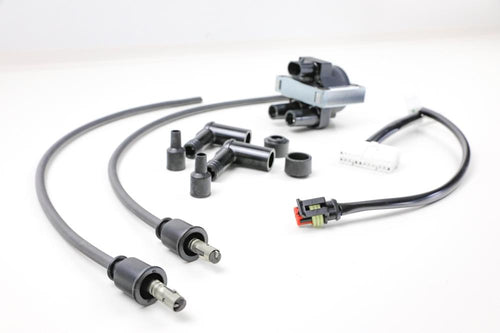
The engine is completely rebuilt: 1070 cc cylinders, dual ignition (you can see the second spark plug), reworked cylinder heads, and a different camshaft from us. Depending on the exhaust, we achieve 85 to 90 hp and around 90 Newton meters. With the light vehicle, the power has an easy time. You won't miss anything – not even when overtaking with a passenger.
Cockpit, suspension, tires
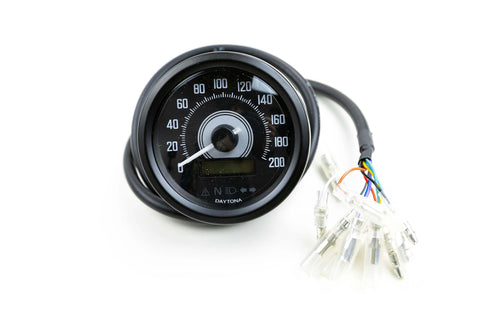
Cockpit: We are currently switching from Taro to Daytona instruments and building universal plug-and-play wiring harnesses for them. This instrument has the speed and a small tachometer on the side – 80 mm diameter, similar to the Motogadget Chrono Classic. I don't know of any other manufacturer with this shape.
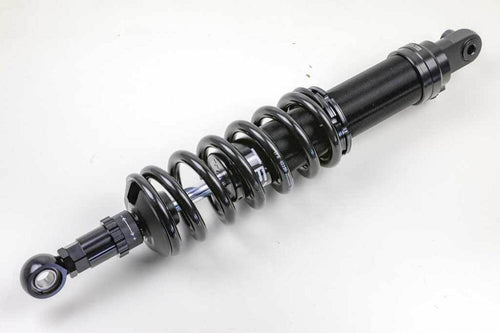
Suspension: Inside are our TF-X shock absorbers from the SE Performance Line – that's actually the only thing we still sell, because it has made a huge quantum leap in terms of comfort and convenience.
Tires: Pirelli STR, 110/80-18 at the front, 140/80-17 at the rear. The 140/80 is only available in 17 inches – that's why we can't offer it for the Monolever. A tire with almost road-like handling that still shows the robustness that a scrambler should show. For me, always the first choice for the Paralevers.
Urbanity can be combined with practicality – we see that here. Now it's off to the road, 80 to 100 kilometers to break it in, and then I look forward to Olli's face at the handover.