Das Wichtigste in Kürze
- Plug & Play applies to the wiring harness and handlebar switches – lights and turn signals require adjustment
- Without soldering experience, custom builds become difficult
- Connectors take time to manufacture, but make every job easier later on
- Cable colors on old BMWs are unreliable – always check with a multimeter
- Disconnect the negative terminal before working, and install a fuse during assembly
- If you get stuck, you can bring the motorcycle to us
Today I'm in the workshop with Flo. His passion: electrical systems. When he started with us and said he enjoyed doing electrical work, it was clear – he's our man. Up until then, Moritz had been doing all the electrical work alone. It's nice to be able to split that up.
Electrical work isn't rocket science – but you have to have a knack for it
On almost every motorcycle, the components are the same: turn signals, lights, speedometer, ignition control unit. It's not rocket science. But as with everything, you have to be interested in it and have a bit of a passion for it.
We've noticed that many people customize their motorcycles at home and achieve great results. They feel confident bolting on a subframe, but things get difficult when it comes to the electrical system. That's why we've standardized our components as much as possible. With our wiring harness concept, we can handle every BMW we've had so far without having to do much rewiring.
What "Plug & Play" really means
We've always used the term Plug & Play – and then realized that some people thought they wouldn't have to do anything at all. That only applies to certain components:
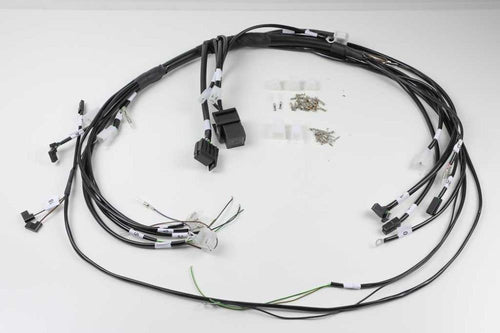
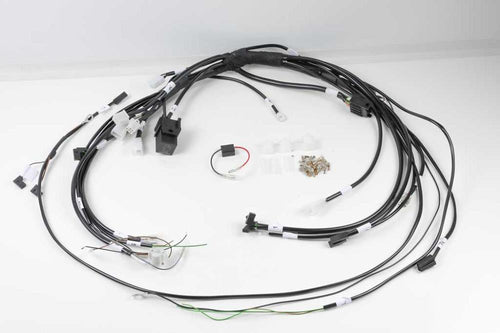
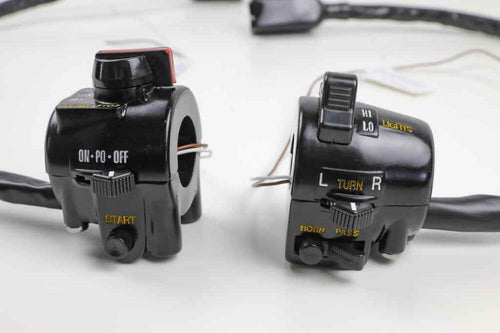
- Plug & Play: Wiring harness and handlebar switches are simply plugged together.
- Individual: Turn signals and lights must be adjusted depending on the version – 3-in-1 lights with tail and brake light, individual turn signals, or a bobber tail with a different taillight solution.
- Paths and lengths: For custom builds, you have to extend or solder cables. You won't get far without soldering experience.
Routing cleanly and using connectors
As technicians, we don't just see aesthetics on the surface, but also under the tank. Neatly routed electrical wiring doesn't just look good; it also helps anyone who has to work on it again later – for example, for different handlebar switches or a different headlight.
Many people connect the handlebars, speedometer, and headlight directly to the wiring harness. We rely on connectors. Soldering would actually be faster in production, because a good connector means: crimping pins, insulating, and adjusting cable lengths so it looks clean. In return, you have a disconnection point later on where everything can be separated. In the long run, that is much more effective.
"The green wire to the yellow one?"
I get calls like that often – and it can't be solved over the phone. While there are colors that are usually ground or usually positive on BMWs, that's only usually. And with motorcycles of this age, nobody knows what previous owners have already changed – sometimes there are even hardware store cables instead of stranded wires in the harness. We collect original wiring harnesses ourselves to be able to use the right colors for repairs, and we still find pieces where someone used yellow-blue instead of yellow-green.
That's why I generally don't give out cable colors over the phone. Instead:
- Multimeter or test light: Red tip to the cable, black to the frame or battery ground – that way you can immediately see if a cable is carrying power or is ground.
- Measuring switches: If you want to connect our handlebar switches to the original wiring harness, measure every contact in continuity mode and make a note: light, right turn signal, left turn signal. There is no general manual for this – with so many wiring harness variants, that would be impossible.
Working safely
- Disconnect the negative terminal: We teach this to our apprentices right away. Then nothing can happen to start with.
- Trust the fuses: If you connect a positive wire to a ground wire, the fuse will normally blow. A lot has to happen before a wiring harness actually goes up in flames.
- Tip – Assembly fuse: For assembly, place a short adapter cable with a fuse between the battery and the positive cable. There are also self-resetting bimetallic fuses. If you connect something incorrectly, only this fuse will blow.
I once experienced how important this is on the test bench: a racing motorcycle with a master switch where positive and ground were swapped. I turn the switch, and within fractions of a second, everything is glowing. The switch was immediately welded shut; only the fire extinguisher remained.
We don't leave anyone in the lurch
Anyone who buys parts from us and does their own conversion gets a promise: if you get stuck, we will help. We are happy to give tips on specific questions. We can't provide a multi-hour basic telephone course in electrical engineering – but you can bring the motorcycle by, and we'll finish it for you. We're happy to do that, practically every day.